60 years on, the Monkees still entertain
Their TV series and movie are available on Tubi and Prime
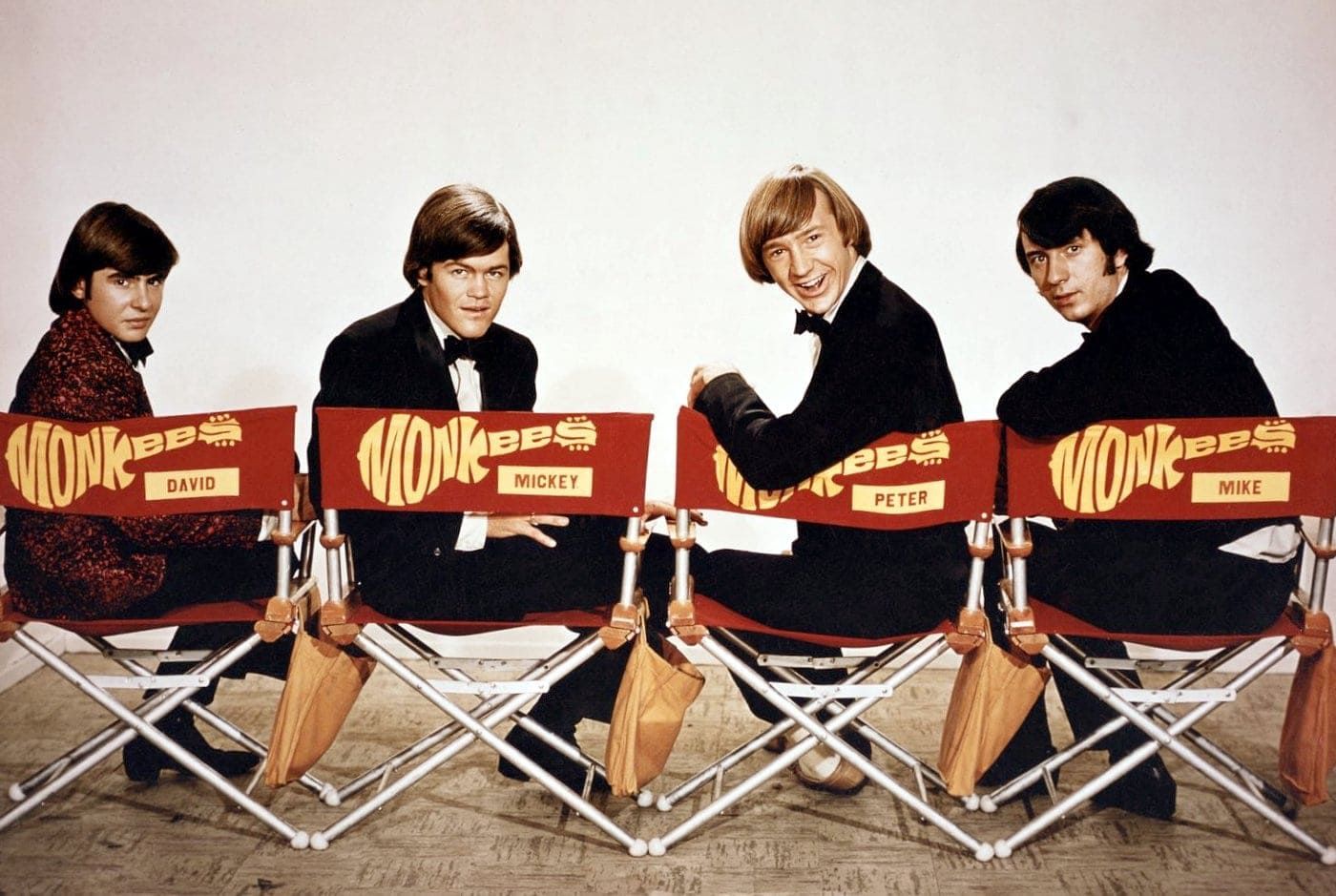
This week was the 60th anniversary of the first episode of “The Monkees,” a series whose music and humor has managed to stay in the popular culture, entertaining audiences through the generations across the decades.
Music historians recall that hundreds of people auditioned for what appeared to be a televised version of “A Hard Day’s Night,” the hugely successful Beatles film. The requirements were less about music and more about humor, but producers Bob Rafelson and Bert Schneider did well choosing Broadway star Davy Jones; television actor Micky Dolenz; country songwriter (and heir to the Liquid Paper fortune) Michael Nesmith; and folk singer Peter Tork for the project.
The Monkees are, in my opinion, unfairly maligned in much of what you may have read about them. Although they were thrown together in a manufactured way, once things settled down, Davy, Micky, Mike, and Peter were actually a good rock and roll band. They made some great music that has stood the test of time, and the TV shows they appeared in are funny to this day, appreciated even by the jaded connoisseurs of hip-hop, gangsta rap, and even contemporary top 40 radio.
While rock critics and hipsters had a good time making fun of the “pre-fab four,” the Monkees created some of the very best pop music of the 1960s, with songs composed by the cream of the Brill Building songwriting factory. Gerry Goffin & Carole King; Barry Mann & Cynthia Weil; Jerry Lieber & Mike Stoller; Neil Sedaka; Carole Bayer Sager; David Gates (Bread); Jeff Barry & Ellie Greenwich; Harry Nilsson; Neil Diamond; Tommy Boyce & Bobby Hart; and more contributed hits to the Monkee machine alongside good writing contributions from band members Michael Nesmith and Peter Tork, occasionally aided by Micky Dolenz and Davy Jones.
These guys had Jimi Hendrix as their opening act. They had top-shelf players like Ry Cooder, Stephen Stills, Neil Young, and Red Rhodes backing them on their records. The good decisions that were made are simply astounding. The Monkees TV show was a top 10 show during its original run of 58 episodes and won the 1967 Emmy for Best Comedy Series. Alongside the sitcom, their records outsold the Beatles and the Rolling Stones combined in 1967 – they were truly a pop culture phenomenon.
Yet, the bad blood persisted between the Monkees themselves and the Man with the Golden Ear who created them, Don Kirshner. Blasted by their peers for not writing their own songs or playing their own instruments – which was not true, as with many other artists they were aided by Wrecking Crew players on their records – tensions boiled over and the band confronted Kirshner in a showdown that nearly ended in a fistfight between Nesmith and Kirshner.
The network, the record company, and producers Rafelson and Schneider backed the made-for-TV band – but immediately set about looking for ways to kill them off. Enter perhaps one of the most peculiar and beautifully bizarre films of the 1960s or any decade: “Head,” released in December 1968.
Rafelson and his partner Jack Nicholson (yes, THAT Jack Nicholson) wrote and directed “Head” with the Monkees themselves. It’s a surrealistic extension of the Monkees’ humor, to be sure. The film begins with the band committing group suicide by jumping from a suspension bridge, and it just gets weirder from there. A series of vignettes follows, with the guys in a variety of strange situations that initially struck most moviegoers as an R-rated version of the television show.
While the movie has its admirers, the soundtrack is a totally different musique concrète experience, with film dialogue and non sequiturs connecting some of the most adventurous music of the Monkees’ career. In fact, Rolling Stone magazine named the “Head” soundtrack as one of the most important soundtracks ever made. It is definitely situational, in that it is a document of an unrepeatable set of circumstances created by guys who found themselves in an unprecedented point in life: one of the top groups on the planet self-cancels their successful TV show and spends the next year undoing their entire creation story with a TV special and movie. At the same time, the band was pulling itself in four decidedly different directions: Nesmith toward country, Dolenz toward R&B, Jones toward Broadway, and Tork toward folk.
As time has rolled on, however, the band has only grown in stature, gaining respect from new generations of fans. The Monkees re-emerged in the 1970s when their series aired on Saturday mornings; the band performed in wraparound segments in which they advertised Kool-Aid products among other things. Then, in 1986, MTV began airing the series and a whole new audience discovered the pop perfection created by four guys who were thrown together out of nowhere, became the most successful act on the planet, then within two years attempted to destroy their own legend.
As we celebrate the Monkeeversary, I submit ten tracks worthy of your time this week. They are available on all streaming services.
“Last Train to Clarksville” – A Boyce & Hart classic, with a Beatlesque guitar lick to start the proceedings. The song goes on to tell the story of a man phoning the woman he loves, asking her to meet him at the train station before he has to leave, maybe forever.
“I’m a Believer” – This Neil Diamond song has had perhaps the longest life of them all, having been covered by other groups such as Smash Mouth. It is power pop at its finest.
“Sunny Girlfriend” and “You Told Me” – two tracks from the HEADQUARTERS album, fronted by Mike Nesmith, let you hear what the Monkees sounded like playing their own instruments once they wrested control of the studio from Don Kirshner. The whole album is good, but these two tracks really showcase the combination of personalities and talents that made the real-life Monkees great.
“Pleasant Valley Sunday” – Carole King and Gerry Goffin’s commentary on the banality of suburbia in the late ‘60s, this track features stellar work from the band. The real story is how the vocal power of Micky Dolenz is unleashed in a very Grace Slick-style way in the fade-out!
“Tapioca Tundra” – One of the strangest songs to ever chart in the Top 40, this Nesmith tune is a poem describing how a writer can lose control of his work’s meaning and impact once it is consumed by an audience. I would partner this with another Nesmith composition, “Daily Nightly,” which is about rioting on the Sunset Strip and is the first known use of the Moog synthesizer on record. It is trippy, and 100% certified psychedelic.
Three songs from the film HEAD, “Circle Sky,” “As We Go Along,” and “Daddy’s Song,” are great examples of just how far these guys had come in the space of two years. “Circle Sky” is a Nesmith composition and it’s just these guys in power-trio mode, a la Cream, rocking out. “As We Go Along” is a Carole King song that may feature the most beautiful Micky Dolenz vocal ever recorded. “Daddy’s Song,” by Harry Nilsson, tells a miserable story of poor parenting but is delivered in full Broadway rock mode by Davy Jones on lead vocal.
Obviously, there are dozens more gems out there, but these ten titles are a great place to start as we celebrate the 60th anniversary. Sing along, now! “Here we come … walkin’ down the street … we get the funniest looks from … everyone we meet!”
Michael Bird is an assistant professor of music at Faulkner University.