"12 records for a penny" goes the way of the dodo
Columbia House is going out of business after 71 years
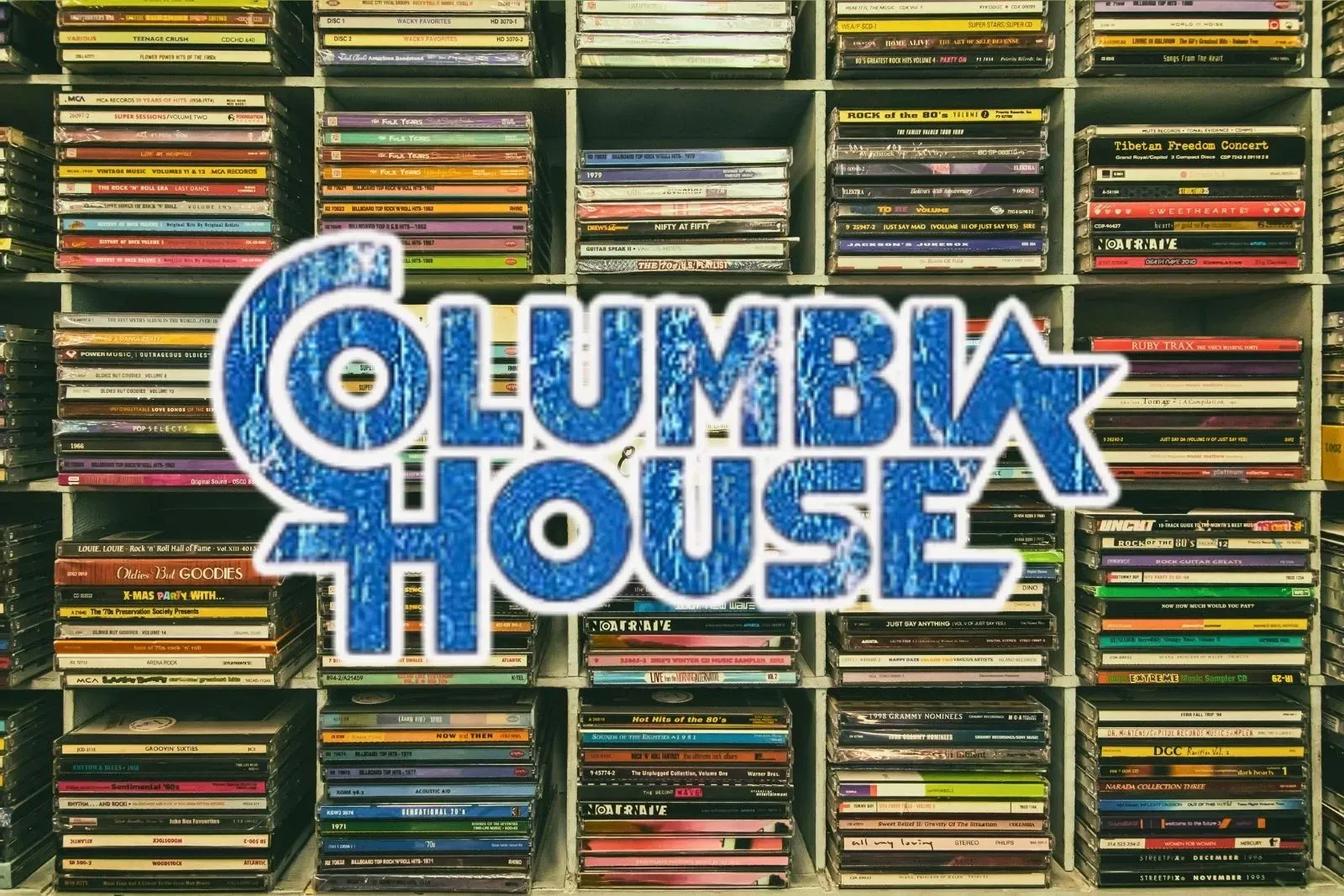
As of September 15, 2026, Columbia House will cease taking new orders.
When the news media reported the closure of Columbia House last week, most of the reactions indicated shock that the company was still around.
Yes, after a remarkable 71-year run, Columbia House is shutting down at the end of the year.
Even if you don’t remember the glory days of the mail-order record club, you have probably heard about getting 12 records (or CDs, or tapes, or DVDs, or Blu-Rays) for a penny. It’s true – you could get any twelve items of your choice for one cent. However, you also had to agree to their terms. Each month, customers would receive a mailer promoting the “Selection of the Month.” If you failed to return the rejection form, Columbia House would send you a copy of the album and bill your account full price.
Founded in 1955 as the Columbia Record Club, the mail-order service was a pioneer of subscription music before the advent of streaming. For many music lovers, being a member of Columbia House was as much a part of the music purchasing experience as a visit to the record store.
At its peak in 1996, Columbia House had around 16 million members and was generating around $1.4 billion in revenue. That was a lot of CDs! But that was also thirty years ago.
Music file-sharing programs around the turn of the millennium such as Napster and Kazaa made piracy easier than ever. Not long after, the introduction of the iPod and iTunes, along with streaming services such as Spotify and Pandora, turned the Columbia House business model into a dinosaur.
As difficult as it was to get out of the bum deal, it was just as easy to scam Columbia House in a time before our every online move was tracked by a distant bot. People could use the names of their pets or friends to create an account (something I did, and had done to me, in college) and Columbia House never batted an eye. Folks could also play games with addresses and endlessly game the record club by having several sets of their “12 records for a penny” delivered to multiple addresses!
There are some unique releases that were available only via Columbia House. Remember the “120 Music Masterpieces” set of albums from Realm Records? That was a Columbia House project – and the way they squeezed 120 classical works on a two-record set was basically to feature only the most well-known ‘theme’ from a particular work before fading into yet another selection. Someone worked hard to make that track list work, but for someone with a passing interest in orchestral music, they probably never noticed.
Another feature of Columbia House was the offering of all available formats. For example, “Fleetwood Mac’s Greatest Hits” from 1988 was available in music stores on vinyl record, cassette, and compact disc – but Columbia House offered in on reel-to-reel tape and 8-track cartridge! (Historical footnote: “Fleetwood Mac’s Greatest Hits” on Warner Bros. Records was the last major official release on 8-track in the United States.) Up through the 1990s, Columbia House still stocked reel-to-reel and 8-track versions of popular albums, which was great for collectors or for people who did not want to update their sound system to a newer format.
I have a whole lot of CDs that say they were manufactured by Columbia House in Terre Haute, Indiana. I’m going to hang on to them as collectables, because in a few weeks, the name Columbia House – and the business model of the mail-order record club – is going the way of the dodo.
Michael Bird is an assistant professor of music at Faulkner University.