Ten Commandments, Revisited
Ten Commandments on TV, followed by the President vs. the Pope
Ten Commandments Revisited
The Alabama Legislature just completed the 2026 session, its final year in the State House they have called home since 1985.
While we regular citizens can debate the merits or accomplishments of our senators and representatives, they accomplished a few things during this session – such as placing the Ten Commandments in every fifth through twelfth grade classroom in Alabama.
There is no doubt that our world runs on these commandments, and that our legal system is based upon them. However, placing them in public buildings has proven to be a slippery slope. Remember Roy Moore? He had them installed and they ended up being forcibly removed by a federal order. How about what occurred in Oklahoma, Arkansas, and Iowa the past few years? The Satanic Temple had Baphomet statues placed in government buildings thanks to religious expression laws, such as those that put the Ten Commandments in public buildings.
Honestly, with the way things have been going, I’ve been fearful that Alabama could be next when it comes to this sort of thing. The way our politics are becoming so toxic, with people cementing their positions on the far right or far left, I’m surprised we haven’t had to deal with it yet. Someone will come along and challenge the public display of the Ten Commandments and force a school or other government building to accept something that may be repulsive to many. I somehow don’t think that is the intention of the lawmakers who voted for this, but here we are.
But I digress.
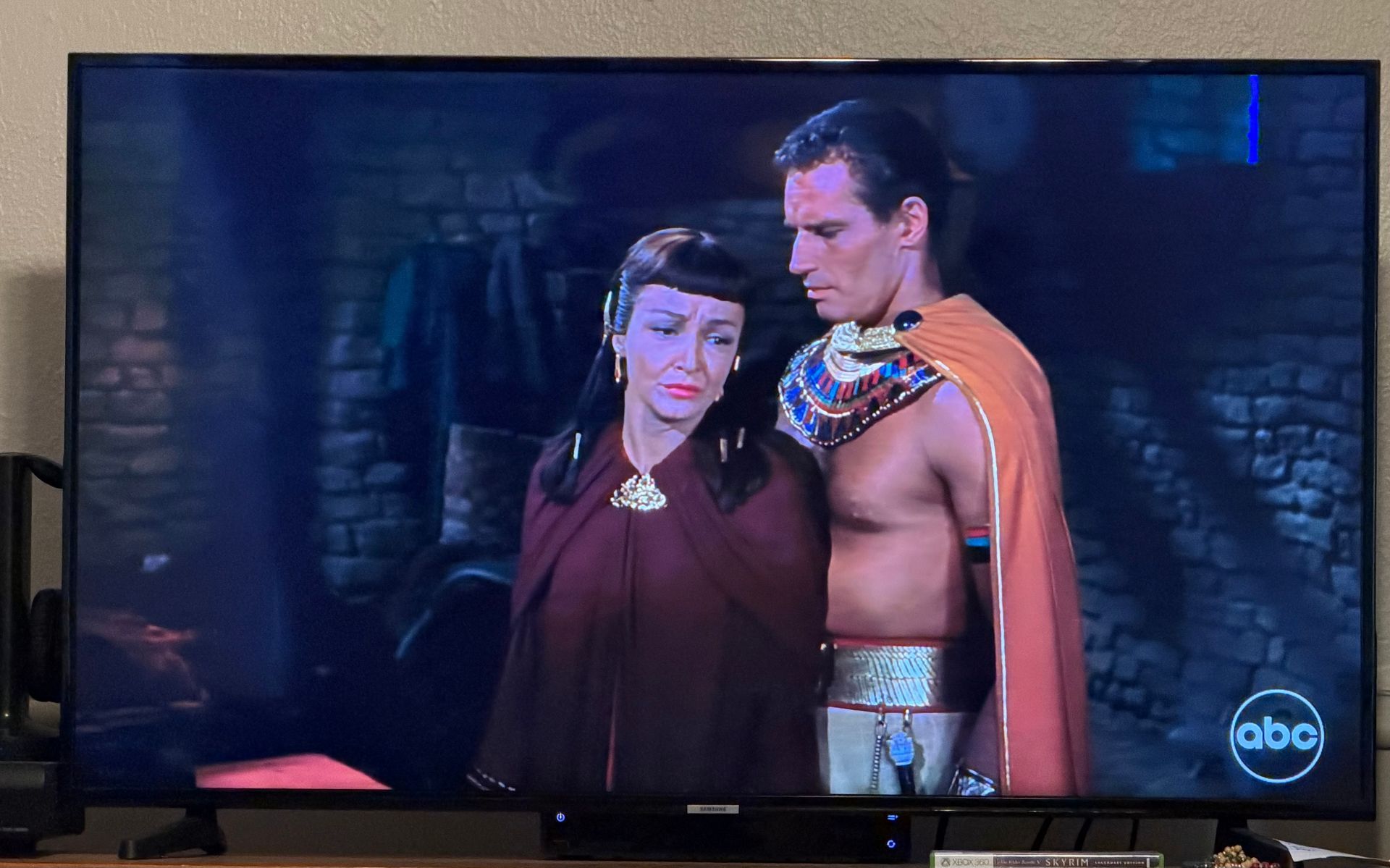
A television tradition during the Passover and Easter period each year is the classic film “The Ten Commandments,” which turned 70 this year and has been airing on ABC-TV for over 50 years.
This Biblical adventure motion picture was produced, directed, and narrated by the legendary filmmaker Cecil B. DeMille, whose career stretched back to the very beginning of the movie industry in the 1910s. Starring Charlton Heston as Moses; Yul Brynner as Rameses; Anne Baxter as Nefertiri; Edward G. Robinson as Dathan; Yvonne De Carlo as Sephora; and Judith Anderson as Memnet, this may be the ultimate epic. Other stars in lesser roles include Clint Walker, John Derek, Vincent Price, and Herb Alpert. It was, at the time, the most expensive movie ever produced, but did a powerful job dramatizing the story of Moses, the adopted Egyptian prince who became the deliverer of his real brethren, the enslaved Hebrew people.
The actors performed in a theatrical style that was common of that period, which is the only thing that dates the film at all. What makes the action sequences so spectacular is the on-location scenery of Egypt and the middle east. Thousands of extras were on hand, as well as hundreds of animals, immersing the viewer into the desert world of the Old Testament ancients.
Yul Brynner was the perfect choice to play the pharaoh, and who else but Charlton Heston could have portrayed Moses? The set pieces that are so memorable about this film – the burning bush, the parting of the Red Sea, the Nile turning into blood, the staff that transforms into a snake, the ten commandments being cut into Mount Sinai by the finger of God – are just as powerful today as they were 70 years ago when the movie was new.
In fact, even though I knew it was coming, the sequence in which Moses has the faith to believe that he can lead his people across the Red Sea moved me to tears. That is some serious faith!
This year, it may be that I was also moved because of current events. It has been so disturbing over the past couple of weeks to see good, God-fearing people engage in some of the most polarizing commentary in recent memory. President Trump decided to celebrate the holiest day on the calendar by unleashing a very unpresidential and profane tirade; during this same period, Pope Leo didn’t call out Trump by name but he definitely called out warmongers and asked that everyone pray for peace. Trump, taking it personally, started the personal attacks on the Pope, the leader of the Christian church on Earth, and posted multiple images of himself as Jesus or being held by Jesus.
Mocking our Lord is not the way. It doesn’t matter if it’s a joke in poor taste. What we have seen from President Trump is straight-up blasphemy. It was disgusting to read the pandering from the likes of Franklin Graham, who made his usual excuses for this. I just wonder when God will have had enough of all of our fooling around down here. In fact, I started to feel like Christians had been used by politicians for votes and power, and started to lose faith in the whole process.
The media tried to frame this as some kind of fight between the President and the Pope. Political cartoonists had a field day, and there were plenty of comments about a Pope from the south side of Chicago taking on a New York casino owner turned President. Some of these were in good fun, and some were appalling. Trump-as-Jesus being beheaded and cast into Hell was as disturbing as the original; I was also outraged when a friend sent me a cartoon of the devil whispering in a possessed-looking Pope Leo’s ear as the Pope’s cassock turned into the colors of an LGBTQ rainbow. How in the world did we get here?
And then, I recalled the hours spent watching “The Ten Commandments” on TV again this year. Those Biblical characters are a lot like us … they struggled with personal issues as well as with the politicians who ruled over them. Why do we remember their stories? Because they show us what faith looks like. And during that Easter weekend, we also recalled the story of Jesus Christ, who died for our sins as he hung on a cross – and yet, in his final moments, forgave the penitent thief who was there next to him, promising him that he would go to Heaven that very day.
May cooler heads prevail in our fallen world. And, like the sign on Interstate 65 says, “go to church or the devil will get you.”
Michael Bird is an assistant professor of music at Faulkner University.